

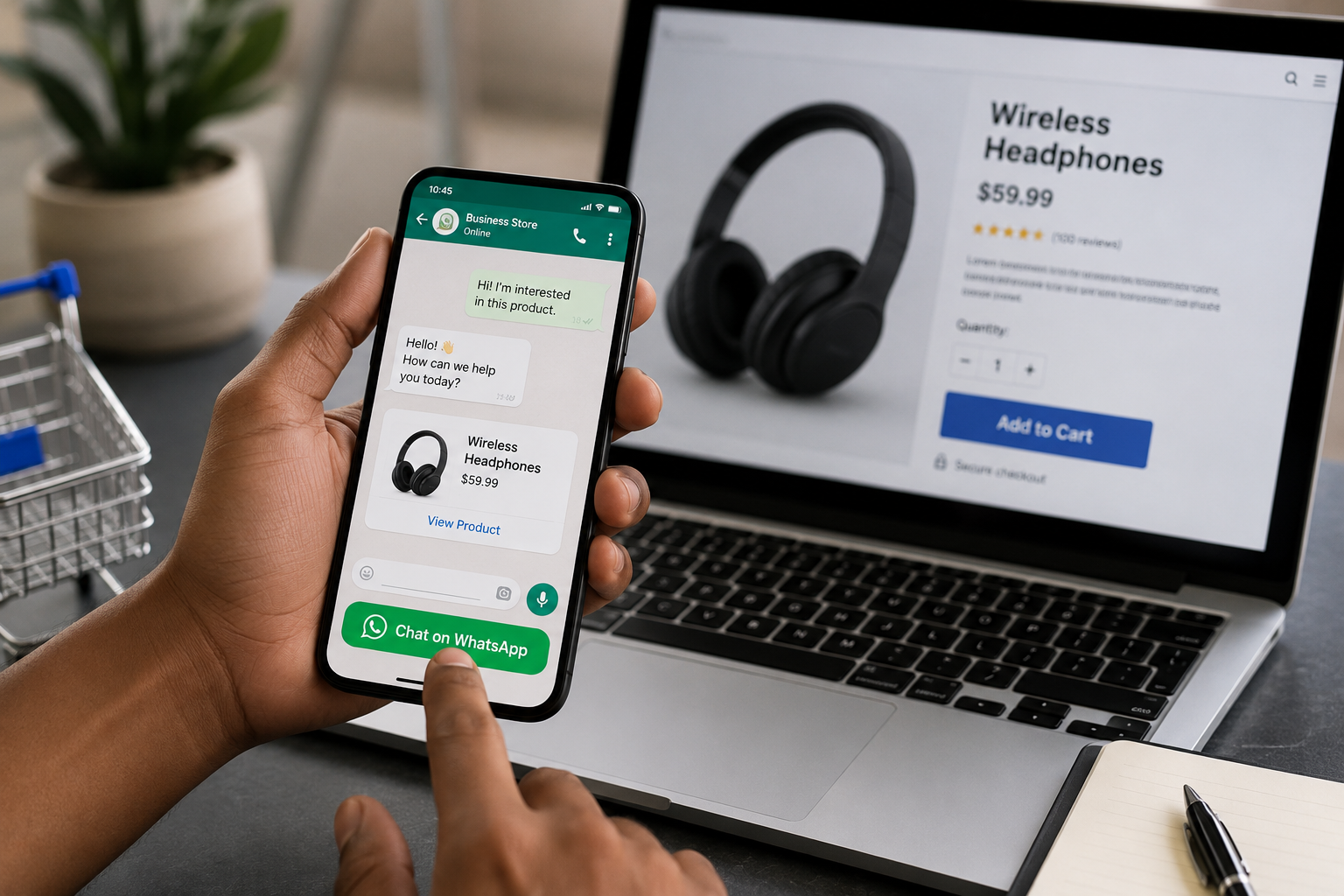
The “Add to Cart” Button Is Losing to “Chat on WhatsApp.” Here’s What That Means for You
A woman in Nairobi sees a dress on TikTok while stuck in traffic on the Expressway. She doesn’t add it to a cart. She taps through to a profile, messages the seller on WhatsApp, asks if it comes in her size, and pays through M-Pesa five minutes later.
No website checkout. No cart abandonment email. Just a conversation that turned into a sale, from her phone, before her exit.
This is what digital marketing actually looks like now
That small moment says a lot about where digital marketing has gone in Kenya. It isn’t about having a nice website anymore, or posting occasionally and hoping for the best. It’s about meeting people exactly where they already are, in the format they already trust.
A few shifts stand out clearly right now:
Conversations are replacing checkouts. Kenyan buyers want to talk before they pay, which is why so many sales now move through WhatsApp instead of a traditional online store.
Local search decides who gets found. When someone searches “salon in Kilimani” or “plumber near TRM,” Google shows a short list of nearby businesses first. If you’re not on that list, you’re effectively invisible to your own neighborhood.
Short video is doing the heavy lifting. A quick TikTok or Reel now drives far more attention and engagement than a static photo post ever did, especially with a young, mobile-first audience.
Why the fundamentals still matter more than the trends
It’s easy to look at all this and think digital marketing is just chasing whatever platform is hot this month. It isn’t. Underneath every one of these shifts is the same handful of core skills, just applied to a new setting.
Getting found on Google Maps is still SEO. Writing a WhatsApp message that actually converts is still content and copywriting. Running a short-form video series is still social media strategy, just in a different format. Following up with a customer after their first purchase is still email marketing, even if the follow-up now includes a WhatsApp nudge too.
People who understand the fundamentals adapt easily when the platform changes again next year. People who only learned one platform get stuck the moment it does.
What this means if you’re building a career or business
This shift matters differently depending on where you sit:
Small business owners need to be findable locally and reachable instantly, not just visible on social media.
Freelancers and marketers are increasingly expected to run full campaigns end to end, not just manage a single platform.
Job seekers are seeing “digital marketing strategy” listed as a requirement even for roles that used to be purely sales or customer service.
Learning it properly, not just piece by piece
Most people pick up digital marketing in fragments — a YouTube video on Instagram growth here, a blog post on SEO there. It works, a little, but it rarely adds up to a real, usable strategy.
Our Digital Marketing course covers SEO, content marketing, social media marketing, and email marketing as one connected system, ending with you building a full digital marketing plan of your own — the same kind of strategy real businesses run, not just isolated tips.
Ready to stop guessing which platform matters this month and build a strategy that actually holds up? Explore Our Digital Marketing course and learn how SEO, content, social, and email work together.